
AIS-140 VLTD and RTO passing, handled end to end.
A certified tracker, panic buttons, state backend activation and the fitment certificate for your RTO. One team, one visit.
What is AIS-140? The VLTD rule for public transport.
AIS-140 (Automotive Industry Standard 140) sets the rules for vehicle tracking and emergency buttons in public transport in India. Under the Ministry of Road Transport and Highways, public service vehicles need a certified vehicle location tracking device (VLTD) with panic buttons that report to a state command and control centre.
In practice, your RTO will ask for proof that an approved device is fitted, wired to panic buttons and live on your state's backend before it passes the vehicle. Our AIS-140 GPS tracker with panic button is fitted and activated for exactly that.
Vehicles that usually need it
- Stage carriage buses
- School buses and vans
- Taxis and cabs
- Contract carriage and tourist buses
- Government and corporate fleets
- Other categories your state notifies
Rules differ by state. Send us your RC and we will confirm what applies to your vehicle.
What an AIS-140 VLTD must have.
Six things an AIS-140 setup checks for. Our AIS-140 GPS tracker with panic button covers all of them.
- A certified device
- The tracker model must be tested and certified to AIS-140 by an approved testing agency.
- Panic buttons
- Emergency buttons for passengers, wired to the tracker, that alert the authorities with the vehicle's location.
- NavIC support
- Positioning that includes India's IRNSS (NavIC) satellites.
- Two networks
- Connectivity across two operators, usually a dual-profile eSIM, so alerts get through.
- State backend
- Location and alerts reported to the state's command and control centre.
- Tamper protection
- Alerts when the device is disconnected or opened.
AIS-140, explained.
Five questions transport operators ask us before fitment.
What is a VLTD?
VLTD stands for vehicle location tracking device. Under AIS-140 it is the tracker fitted in a public service vehicle: it reports position, speed and alerts to the state's command and control centre, and it is wired to panic buttons inside the vehicle.
A VLTD differs from a regular GPS tracker in three ways: the model must be certified to AIS-140, it must report to the state backend as well as to your own app, and it must keep working across two mobile networks.
How to check a device is really AIS-140 certified
Ask for the certificate of the exact model being fitted. AIS-140 certificates are issued by approved testing agencies such as ARAI or ICAT after the model passes the standard's tests.
Check that the model is empanelled with your state's transport department, because only empanelled models can be activated on that state's backend. A certified device that is not empanelled in your state will not clear fitness.
Keep the fitment certificate, which lists the device IMEI and your vehicle number. The RTO matches these against the backend record.
AIS-140 for school buses, taxis and trucks
School buses, stage carriages, contract carriages, taxis and cabs are the vehicles most states bring under AIS-140 first, because they carry passengers. Some states also apply it to other permit categories.
Rules and deadlines differ by state, so we confirm the category of your vehicle with your RC and permit before fitting anything.
What the RTO checks at fitness
That a certified tracker is fitted and powered, that the panic buttons are wired and work, and that the device is live on the state backend against your vehicle number.
The inspector may press a panic button and check that the alert reaches the backend. We test every button with you at fitment so there are no surprises.
Renewal and the yearly subscription
The device's data plan and backend subscription renew every year. If a renewal lapses, the vehicle drops off the backend and can fail its next check, so we remind you well before the date.
AIS-140 fitment and RTO passing in six steps.
What happens after you call us, in order.
Share your vehicle details
Send the RC, permit, chassis and engine numbers, and the state where the vehicle is registered.
We confirm state support
We check backend support for your state and vehicle category before anything is billed.
Fitment with panic buttons
Our installer fits the tracker and the panic buttons, then tests every button with you.
Backend activation
The device is mapped to your vehicle on the state backend and starts reporting.
Fitment certificate
You receive the certificate with the device and vehicle details for your RTO file.
Pass fitness and renew
Present the vehicle at the RTO. We remind you before the yearly renewal is due.
Keep these ready for fitment.
- Copy of the RC (registration certificate)
- Permit copy for the vehicle
- Chassis and engine numbers
- Owner ID and a contact number
- The vehicle, at your depot or our fitment point
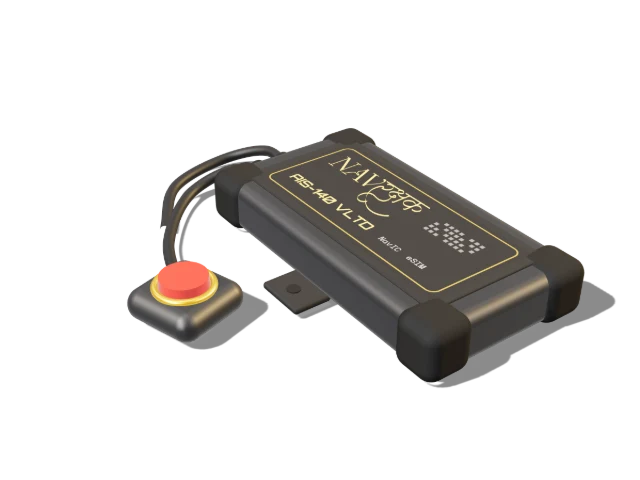
Our tracker comes with panic buttons, a dual-profile eSIM and NavIC support. School transport operators can also read our school bus GPS tracking page.
AIS-140 GPS tracker with panic buttonWhich vehicles need AIS-140?
Public service vehicles such as buses, school buses, taxis and cabs, and other categories your state transport department notifies. If you are unsure, send us your RC and we will check.
Can any GPS tracker be used for RTO passing?
No. Only AIS-140 certified models, activated on your state's backend, are accepted. A regular GPS tracker will not clear fitness.
How long does fitment and activation take?
Fitment takes about an hour. Activation is usually done the same day once your documents are in order.
What happens at renewal?
The device's data plan and backend subscription renew yearly. We remind you ahead of time so the vehicle never drops off the backend.
Tell us your state and vehicle.
We confirm backend support for your state first, then book the fitment.